Choosing a DTF transfer film by price, thickness, or “hot peel” label alone can miss what matters most in production:
Does the film behave consistently when the job gets difficult?
A good film needs to receive ink evenly, protect detail, release cleanly, feed reliably, and do it again on the next roll.
Here are the six things worth testing before you commit.
1. Test More Than One Good Print
Almost any DTF transfer film can look good on the right sample.
The harder test is whether it stays consistent across a gang sheet, through a long run, and from roll to roll.
This matters more as printable area increases. A small variation in coating or ink reception may be difficult to notice on one logo, but across a large gang sheet it can affect multiple sellable transfers at once.
Watch for:
uneven solids · color shifts · lost fine detail · inconsistent release · unexpected reprints
For high-volume shops, consistency is not simply a print-quality issue. It affects usable output, operator intervention, waste and production time.
2. Look at Ink Reception—not Just “Vibrant Color”
“Vibrant color” is easy to claim.
A more useful question is:
How consistently does the film receive and hold the ink across the printable area?
Coating variation can change how ink behaves, which is why DTF transfer film should be evaluated together with the printer, ink and ICC profile.
In one customer evaluation, the same shop compared its current film with Glide Pro™ film.
The test showed a larger measured color gamut with our Glide Pro™ film with same workflow settings.
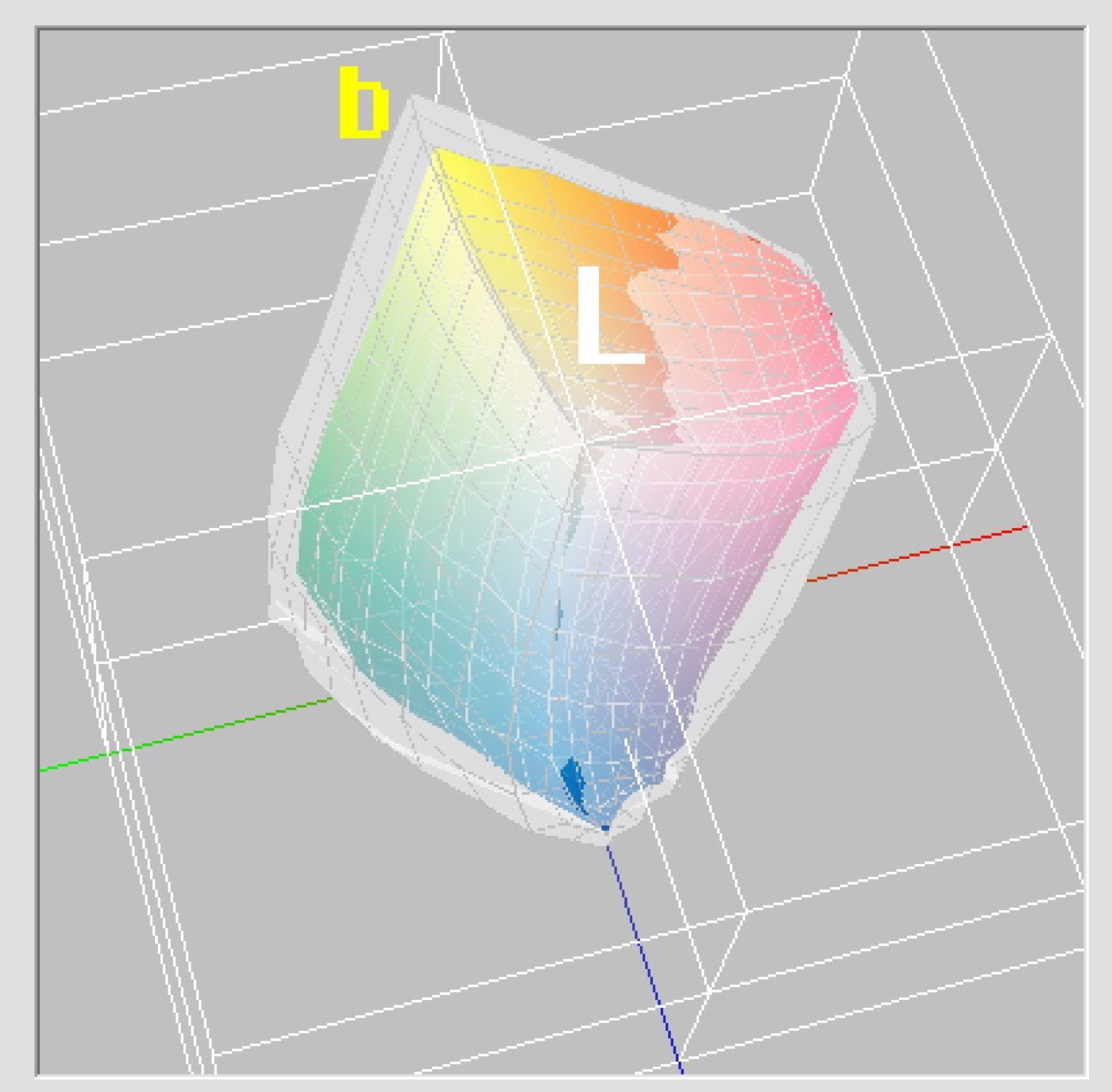
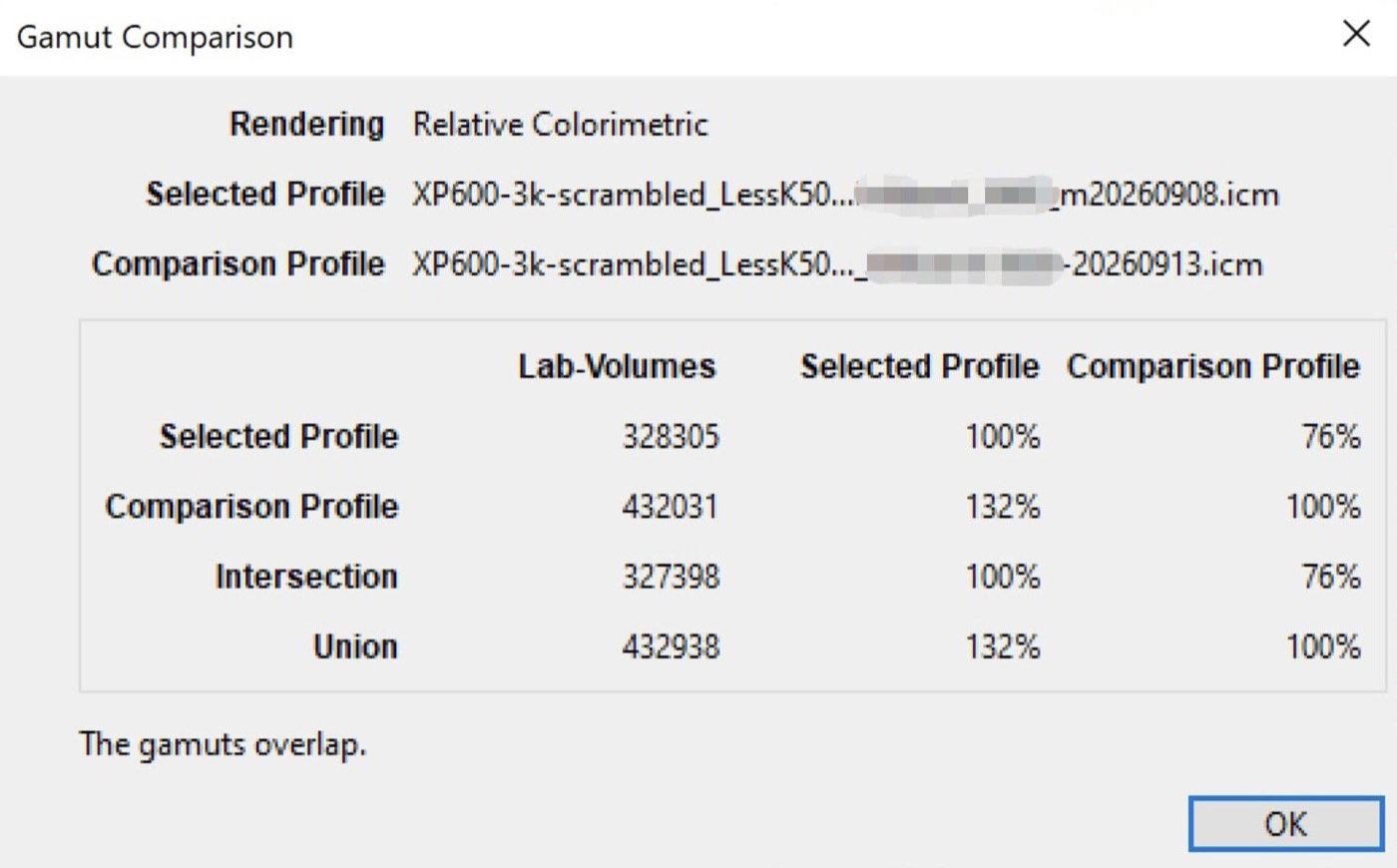
That is not a promise that every printer will gain the same amount. Printer, ink, ICC profile, settings and production conditions all influence the result.
The important point is simpler:
Film can be a variable in the color your system is able to reproduce.
3. Use Fine Detail as a Stress Test
Large graphics can hide film weakness.
Try:
small text · thin lines · neck labels · detailed logos · sharp edges
When coating and release become less predictable, those are often the first areas where incomplete detail becomes obvious.
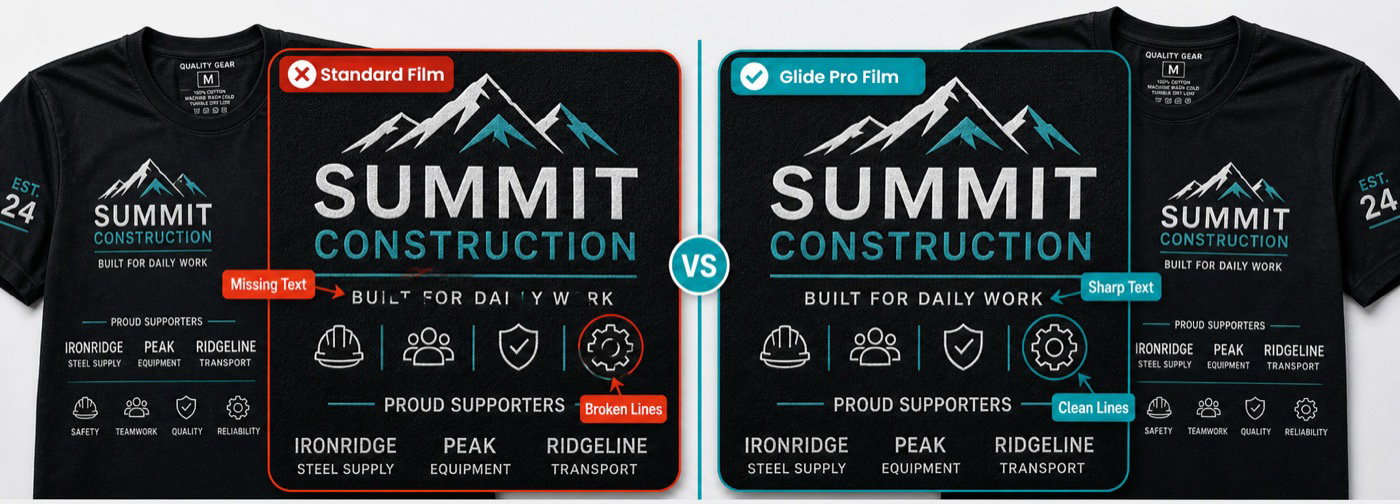
Glide Pro™ uses an extra fine-detail protection layer together with its coating system to help keep small elements more complete through printing, curing, peeling and transfer. Internal product testing and development specifically target sharper small text, cleaner lines and more complete edges.
That makes detailed artwork a much better DTF transfer film test than printing another large solid logo.
4. Don’t Confuse Fast Peel With Better Film
Hot peel DTF film can improve workflow because operators do not need a long cooling stage before removing the carrier.
But peel speed alone does not tell you whether a film will deliver:
stable ink reception · clean details · controlled release · consistent feeding · repeatable results
Glide Pro uses a five-layer structure with double release layers, while its double-matte construction supports stable media handling. Its product design is intended to combine clean release with strong color, fine-detail reproduction and a soft, flexible finished feel.
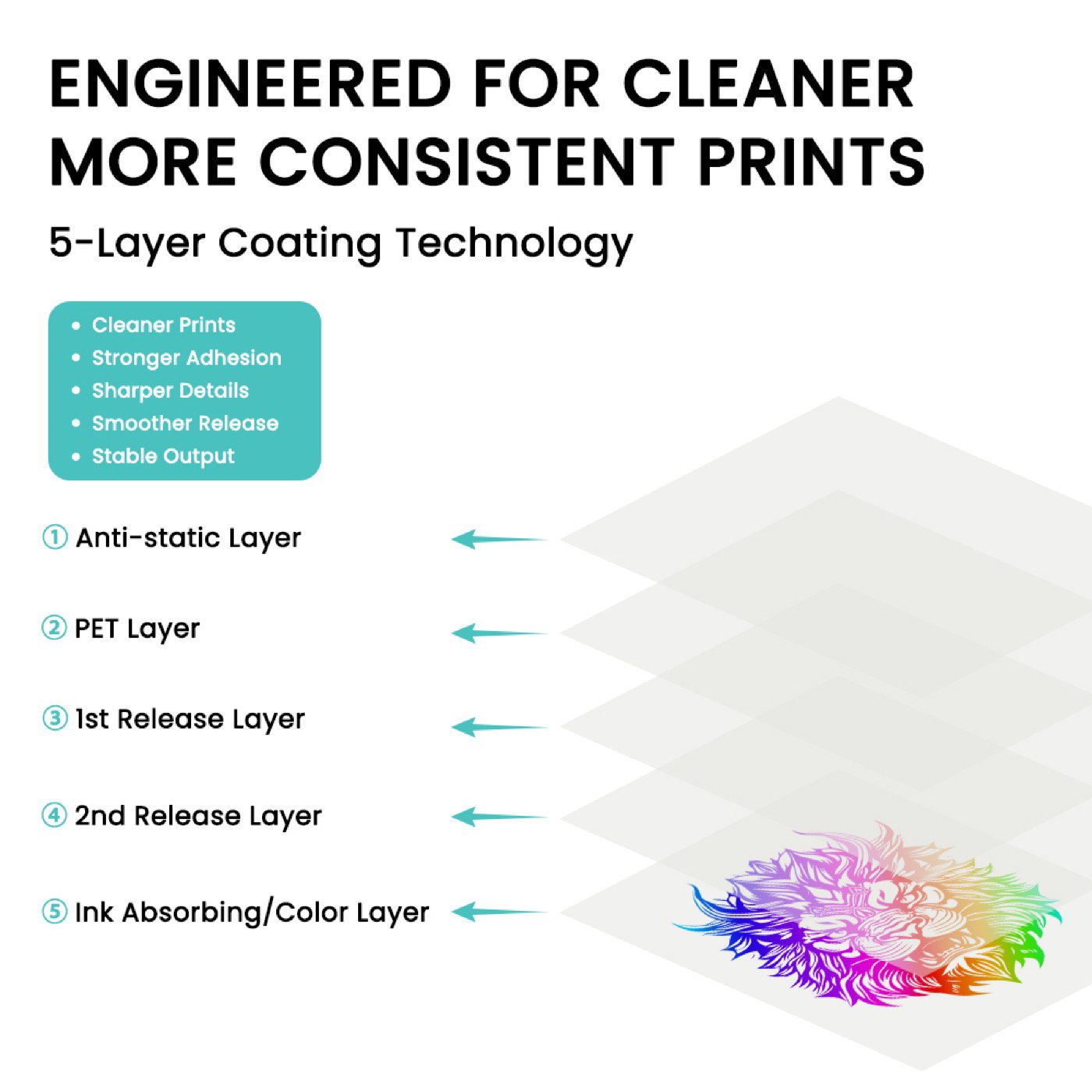 Color Prime Glide Pro DTF Transfer Film Roll – 5 Layer Structure
That distinction matters for shops comparing films: peel type is one workflow characteristic—not the complete measure of quality.
5. Ask How the Film Is Actually Manufactured
This is where a supplier should be able to give you more than adjectives.
For Glide Pro™, Color Prime’s coating process includes:
- 0.05 µm coating-thickness measurement accuracy
Used to detect small coating variation. - 40 m/min stability-first coating
The production line intentionally prioritizes coating control rather than maximum coating-line speed. - Self-adjusting V-slot coating head
Output is adjusted in real time to compensate for variation in the base film. - Full-roll thickness checks
Used to check consistency across the roll rather than relying only on small samples.
Automated coating control, real-time monitoring, controlled production conditions and 100% roll inspection are used to support more consistent roll-to-roll performance.
Those are much more useful buying signals than terms such as “premium,” “professional” or “high quality.”
6. Measure Film Cost by Production—not Roll Price
The least expensive roll is not necessarily the least expensive DTF transfer film to run.
One technician who tested our film explained that inconsistency with their previous film had forced them to slow their machines because of starvation.
After switching for the test:
“With your film, we can run the machines faster again, but still with good quality.”
Their conclusion was more important:
“The cheaper film ends up costing us more in waste, issues, slower production, etc.”
That is one customer’s experience—not a universal speed claim.
But it highlights the right way to compare film:
Roll price + waste + reprints + troubleshooting + production speed + usable output
For a production shop or dealer, that calculation is often more meaningful than price per roll alone.
Where Glide Pro™ Fits
Glide Pro is designed for jobs where the final result and production consistency matter more than simply finding the cheapest carrier film.
Its five-layer coating system is built to support:
rich, dense color · clear fine details · cleaner surfaces · soft, flexible transfers · stable double-matte feeding
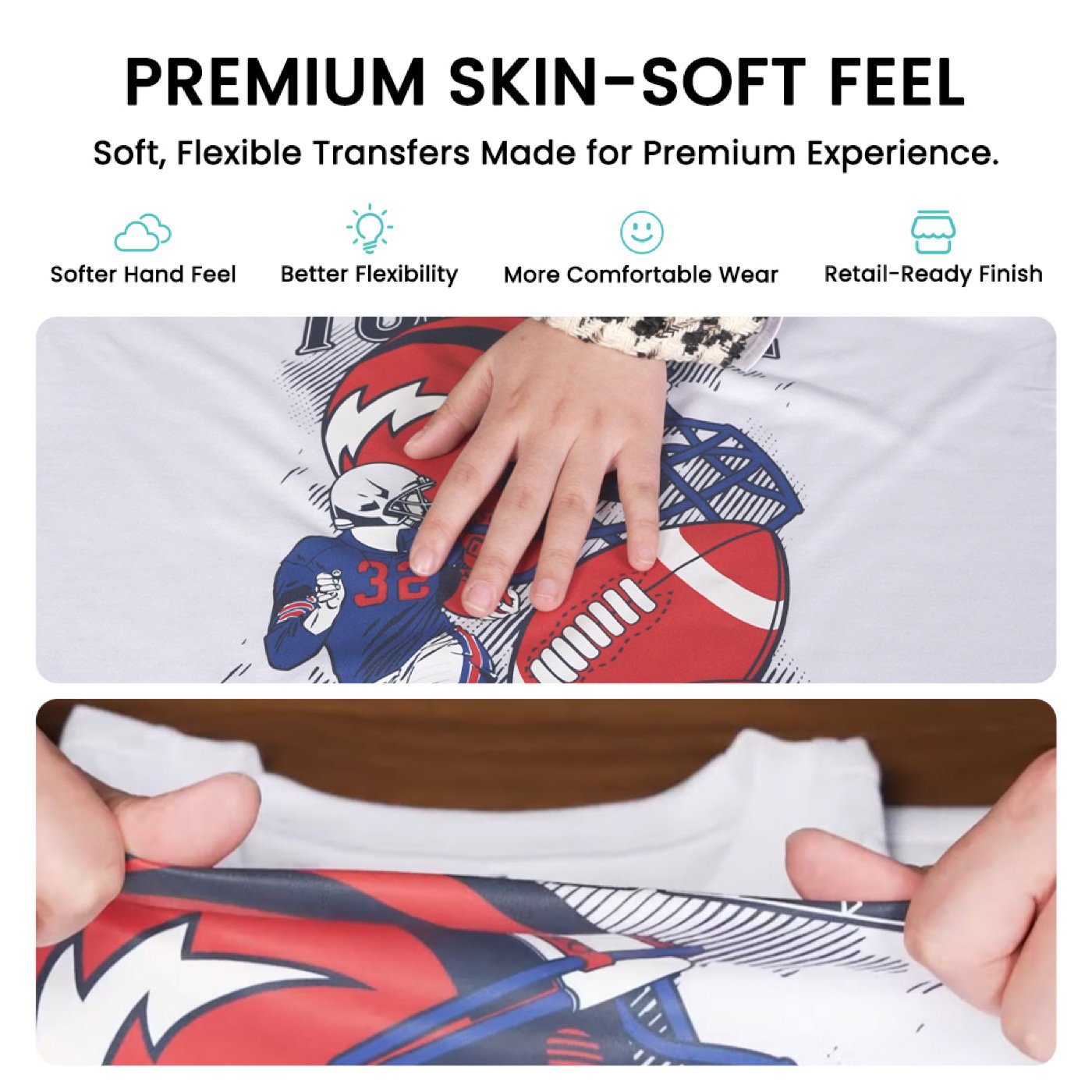
Behind those finished-print benefits are automated coating control, real-time thickness monitoring, controlled production conditions and full-roll inspection.
For dealers, that also creates a clearer way to sell film: demonstrate the result instead of asking customers to believe another quality claim.
The Best DTF Film Test Is Your Own Production
Don’t change your entire workflow to test a DTF transfer film.
Use the same:
printer · ink · powder · artwork · production settings
Then compare your current film with the new film on:
color consistency · fine detail · gang-sheet uniformity · feeding · release · hand feel · waste
For larger shops, include a long gang sheet or repeat job—not just one perfect sample print.
That tells you much more about a DTF transfer film than a specification sheet alone.
Test Glide Pro™ in Your Own Workflow
Try Glide Pro with your own artwork and production setup, then decide whether the difference matters to your business.
Request a Free Glide Pro™ Sample